
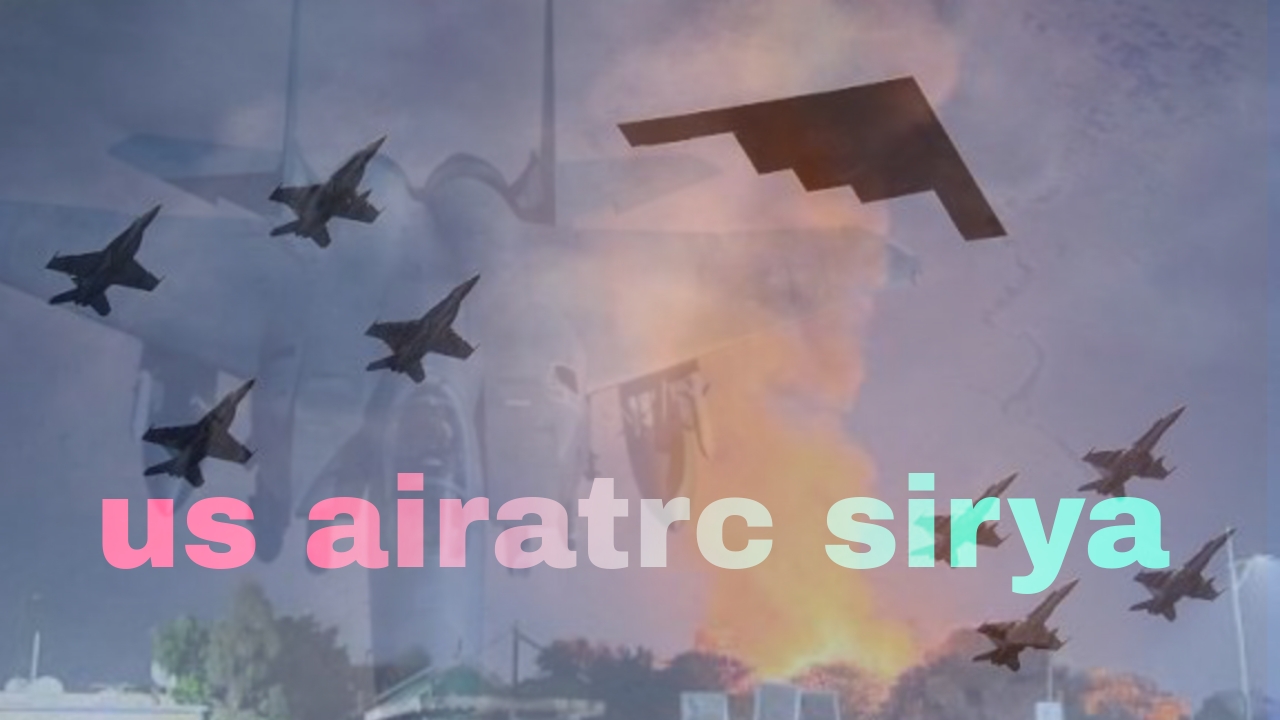
Shadows in the Desert: A Decade of US Airpower in Syria
December 20th 2025, 2:38 pm
The sky over Syria is perhaps the most crowded and complex airspace in the history of modern warfare. For over a decade, the roar of jet engines and the low hum of unmanned drones have been a constant backdrop to the Syrian Civil War. While the conflict is a multifaceted tragedy involving the Syrian regime, Russian forces, Turkish incursions, and various rebel factions, the United States’ involvement has been defined primarily by one instrument of power: Airstrikes.
To understand the US air war in Syria, one must look back to the summer of 2014. The Islamic State (ISIS) had swept across the border from Iraq, erasing national boundaries and declaring a Caliphate. The Syrian government, led by Bashar al-Assad, was too engaged in fighting rebels in the west to stop the jihadist tide in the east.
In September 2014, the United States, leading a global coalition, launched Operation Inherent Resolve. The initial objective was clear: to degrade and destroy ISIS. However, the strategy was notably different from the invasion of Iraq a decade prior. There would be no massive deployment of American ground troops. Instead, the US would rely on "partners on the ground"—primarily the Kurdish-led Syrian Democratic Forces (SDF)—supported by overwhelming American airpower.
Following Kobani, the US air campaign settled into a rhythm that would define the war for the next five years. The strategy relied on advanced intelligence, surveillance, and reconnaissance (ISR). Drones loitered over targets for hours, building "patterns of life" before strikes were authorized.
This model allowed the US to project immense power with relatively low risk to American personnel. It turned the tide in major battles like the liberation of Raqqa (the de facto ISIS capital) and the final stand at Baghuz.
However, this reliance on airpower created a unique battlespace dynamic. The US was operating in the same airspace as the Syrian Air Force and the Russian Air Force (which intervened in 2015 to save Assad). To prevent World War III, a "de-confliction" line was established—a hotline between US and Russian commanders to ensure their jets did not accidentally engage one another. It was a tense, high-stakes dance where American F-22 Raptors often flew within visual range of Russian Su-35s
While the primary mission was counter-terrorism, US airstrikes in Syria occasionally shifted focus, revealing the broader geopolitical tensions of the region.
The US air campaign expanded its scope under both the Trump and Biden administrations to enforce "red lines" regarding chemical weapons and to deter Iranian influence.
These strikes highlight a shift in mission creep. What began as a war against a terrorist caliphate has evolved into a low-level, simmering conflict between the US and Iranian proxies, fought almost exclusively through airframes and drones.
The Pentagon frequently described the war against ISIS as the "most precise air campaign in history." They pointed to the use of GPS-guided JDAMs (Joint Direct Attack Munitions) and strict rules of engagement designed to minimize collateral damage.
However, independent monitoring groups like Airwars and investigations by major media outlets painted a starkly different picture. The battle for Raqqa, for instance, resulted in the destruction of nearly 80% of the city. While the US military officially acknowledged a relatively low number of civilian casualties, independent estimates suggested that thousands of civilians died in the rubble.
The discrepancy often lay in the definition of a "combatant" and the reliance on video feeds from the air, which cannot always distinguish a fighter from a civilian hiding in a building. The tragedy of the air war was highlighted in later investigations into the 2019 Baghuz strike, where a US special operations cell called in airstrikes on a crowd that included women and children. This incident sparked internal investigations and a renewed debate about transparency and accountability in modern warfare.
When a superpower wages war from 30,000 feet, the disconnect between the pilot pressing the button and the reality on the ground remains a profound ethical chasm.
To understand the US air war in Syria, one must look back to the summer of 2014. The Islamic State (ISIS) had swept across the border from Iraq, erasing national boundaries and declaring a Caliphate. The Syrian government, led by Bashar al-Assad, was too engaged in fighting rebels in the west to stop the jihadist tide in the east.
In September 2014, the United States, leading a global coalition, launched Operation Inherent Resolve. The initial objective was clear: to degrade and destroy ISIS. However, the strategy was notably different from the invasion of Iraq a decade prior. There would be no massive deployment of American ground troops. Instead, the US would rely on "partners on the ground"—primarily the Kurdish-led Syrian Democratic Forces (SDF)—supported by overwhelming American airpower.
Following Kobani, the US air campaign settled into a rhythm that would define the war for the next five years. The strategy relied on advanced intelligence, surveillance, and reconnaissance (ISR). Drones loitered over targets for hours, building "patterns of life" before strikes were authorized.
This model allowed the US to project immense power with relatively low risk to American personnel. It turned the tide in major battles like the liberation of Raqqa (the de facto ISIS capital) and the final stand at Baghuz.
However, this reliance on airpower created a unique battlespace dynamic. The US was operating in the same airspace as the Syrian Air Force and the Russian Air Force (which intervened in 2015 to save Assad). To prevent World War III, a "de-confliction" line was established—a hotline between US and Russian commanders to ensure their jets did not accidentally engage one another. It was a tense, high-stakes dance where American F-22 Raptors often flew within visual range of Russian Su-35s
While the primary mission was counter-terrorism, US airstrikes in Syria occasionally shifted focus, revealing the broader geopolitical tensions of the region.
The US air campaign expanded its scope under both the Trump and Biden administrations to enforce "red lines" regarding chemical weapons and to deter Iranian influence.
These strikes highlight a shift in mission creep. What began as a war against a terrorist caliphate has evolved into a low-level, simmering conflict between the US and Iranian proxies, fought almost exclusively through airframes and drones.
The Pentagon frequently described the war against ISIS as the "most precise air campaign in history." They pointed to the use of GPS-guided JDAMs (Joint Direct Attack Munitions) and strict rules of engagement designed to minimize collateral damage.
However, independent monitoring groups like Airwars and investigations by major media outlets painted a starkly different picture. The battle for Raqqa, for instance, resulted in the destruction of nearly 80% of the city. While the US military officially acknowledged a relatively low number of civilian casualties, independent estimates suggested that thousands of civilians died in the rubble.
The discrepancy often lay in the definition of a "combatant" and the reliance on video feeds from the air, which cannot always distinguish a fighter from a civilian hiding in a building. The tragedy of the air war was highlighted in later investigations into the 2019 Baghuz strike, where a US special operations cell called in airstrikes on a crowd that included women and children. This incident sparked internal investigations and a renewed debate about transparency and accountability in modern warfare.
When a superpower wages war from 30,000 feet, the disconnect between the pilot pressing the button and the reality on the ground remains a profound ethical chasm.


No comments yet.